Jump to main content

With Perspectives the Cologne International Forum would like to introduce its new event series in collaboration with the At-Risk Scholar Support of the University of Cologne.

The University of Cologne has a strong commitment to support at-risk scholars. It has been part of the worldwide Scholars at Risk network since 2015 and founding member of the Scholars at Risk Germany Section.

The University’s commitment to supporting international scholars who cannot pursue their research due to restrictions on their academic freedom, persecution, or war, requires the need to look at the world as a whole and local realities simultaneously.    

Perspectives events will focus on topics dealing not only with the complex experiences of exile and migration but also spotlight specific crises and explore how societies deal with migration and ongoing transformation. 

 

Perspectives

Upcoming Events

Perspectives: LECTURE
»‘Academic Humanitarianism’ as Emergent Dispositive: A Critical Appraisal of Europe’s Scholar Protection Programmes, 2016-2024«

13 November 2025, 5 p.m. - International House (Kringsweg 6)

The venue is wheelchair accessible and the lecture will be held in spoken English.

Academic communities worldwide are going through dire times, experiencing severe threats to civic and human rights and their ability to engage in critical research and teaching. At the same time, the last decade has seen concerted efforts on the part of universities, civil society organisations, public and private institutions to mobilise resources for the protection and support of displaced scholars.

Through our research, we aim to gain a better theoretical understanding of how the logic of ‘humanitarian reason’ gets mapped onto the academic field. Drawing on Foucault’s work, we develop a dispositive analysis of the complex formation that Yarar/Karakaşoğlu have termed ‘academic humanitarianism’.

Our study is based on extensive empirical research dedicated to the analysis of the discursive, material and knowledge practices articulating this newly emerging dispositive. Particular attention is paid to the frames that policy actors mobilise to navigate the tensions around conflicting rationales for ‘scholar rescue’ programmes. Moreover, we critically discuss the role that the creation of categories such as the ‘at-risk scholar’ plays in academic humanitarian interventions and processes of knowledge production. The EU SAFE fellowship programme serves as a case study to examine the range of technologies employed to regulate access to support mechanisms, the pastoral power embodied in hosting/mentoring relations, and the cooperation-competition nexus governing the relationships between network actors such as universities, NGOs, and exiled scholars, but also as a departure point for thinking potential lines of empowerment and re-subjectification.

Esra Erdem

Esra Erdem is Professor of Social Economics at Alice Salomon Hochschule Berlin. She served as Principal Investigator (PI) on the BMBF-funded research project Sage-SAGE! (2021-2024), investigating institutional development strategies and career opportunities for exiled scholars at Universities of Applied Sciences.

Publications in the field of Critical University Studies include “Emergent Repertoires of Resistance and Commoning in Higher Education” (South Atlantic Quarterly, 2019, co-authored); “Free universities as academic commons" (in: The Handbook of Diverse Economies, 2020); “Exiled scholars at Universities of Applied Sciences: New Opportunities and Structural Challenges for an Engaged Academy” (in: SAGE-Hochschulen im Strukturwandel, 2025, co-authored).

Homepage: 
https://www.ash-berlin.eu/hochschule/lehrende/professor-innen/prof-dr-esra-erdem/

Zafer Yılmaz

Zafer Yılmaz is Associate Professor at Ankara University and a research fellow at Alice Salomon Hochschule Berlin. His work critically examines the global rise of authoritarianism, the deepening crisis of democracy, and the far-right's growing hegemony. He has published widely on populism, authoritarian rule, and the authoritarian restructuring of the Turkish state in both academic journals and collective volumes. Among his books are The Spirit of New Turkey: Resentment, Domination and Destitution, Erdogan’s Presidential Regime: From Exceptional Republic to Parcelled State, and The Gloom of the Right: Authoritarian Leaders and the Stolen Rebellion (in Turkish), which interrogate the social, affective, and institutional dynamics of authoritarianism in Turkey and beyond.

REGISTRATION


Perspectives: POETRY READING
»„Ich vermischte die Stimmen“ — Gedichte und Texte von Esther Dischereit auf Deutsch, Hebräisch, Arabisch und Jiddisch«

In Kooperation mit dem Institut für Sprachen und Kulturen der islamisch geprägten Welt

16 December 2025, 6 p.m. - International House (Kringsweg 6) / hybrid

The venue is wheelchair accessible.


ALL-EYES-ON-GAZA 


Lyriklesung und Gespräch über die Situation in Israel, Palästina und Deutschland. Moderiert von Stephan Milich (SKIW)

Esther Dischereit

Esther Dischereit gehört als Lyrikerin, Erzählerin, Essayistin, Theater- und Hörstückautorin sowie Literaturkritikerin zu den herausragenden Stimmen deutsch-jüdischer Literatur der zweiten Generation nach dem Holocaust. Unter anderem erhielt sie 2009 den Erich-Fried-Preis, von 2012 bis 2017 lehrte sie als Professorin an der Universität für angewandte Kunst in Wien. Zuletzt erschien 2024 ihr Roman "Ein Haufen Dollarscheine" bei MaroVerlag. Esther Dischereit liest neue und ältere Gedichte und Kurzprosa und spricht mit Stephan Milich über die Situation für Kultur, Gesellschaft und Wissenschaft nach dem 7. Oktober.

REGISTRATION


Past Events

Perspectives: LECTURE
Housamedden Darwish
»The Concept of Heritage in Contemporary Arab Thought«

19 May 2025 - 4 p.m., International House (Kringsweg 6)

The venue is wheelchair accessible and the lecture will be held in spoken English.

Heritage occupies a central place in contemporary Arab culture and Arab thought. To explore this, I will address the conceptual significance of heritage, its meanings, and its entanglement with other key ideas, such as tradition, the past, authenticity, modernity and renaissance. In doing so, I will also reflect on how Arab intellectuals have approached heritage as both a cultural foundation and a contested problem. By examining the engagement of Arab thought with heritage over time, the shift from revivalist to critical and then to synthesis-oriented perspectives is highlighted. This evolving debate is further situated within the broader intellectual and political challenges in the Arab world. To illustrate these approaches, the works of Hussein Muruwa, Tayeb Tizini, Sadiq Jalal al-Azm, Muhammad Arkoun, Abdullah Laroui, Hassan Hanafi, Muhammad Abed al-Jabri, and Radwan al-Sayyid are underlined as representative models of distinct approaches to heritage in contemporary Arab discourse.
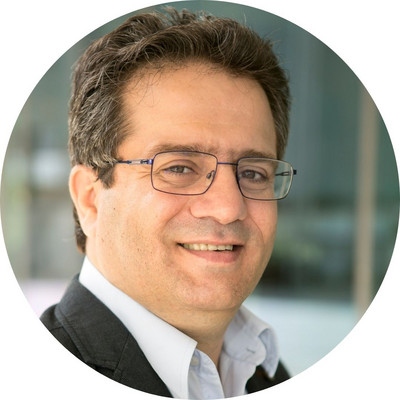
Housamedden Darwish is a writer, researcher, and lecturer at the University of Cologne. He earned his PhD in Philosophy with a specialization in Hermeneutics from the University of Bordeaux 3, awarded summa cum laude with distinction. His work engages with philosophy, Arab thought, Islamic studies, and cultural studies. He has authored nine books in Arabic and three in French and published widely in peer-reviewed journals and in translation in both Arabic and English.

Herausforderungen für die Demokratie in der postmigrantischen Gesellschaft


Die Ringvorlesung des Instituts für Sprachen und Kulturen der islamischen geprägten Welt (ISKIW) und des Instituts für Soziologie und Sozialpsychologie (ISS) der Universität zu Köln befasst sich mit Herausforderungen für die Demokratie in der postmigrantischen Gesellschaft angesichts der aktuellen politischen Entwicklungen. Dazu gehören Verletzungen von Menschenrechten und Ideologien der Ungleichheit, Autoritarismus in seinen verschiedenen Formen, Antisemitismus und antimuslimischer Rassismus. 

Wir freuen uns die Januar-Veranstaltungen als Kooperationspartner am Cologne International Forum begrüßen zu dürfen.

Die Veranstaltungen im Januar finden im International House, Kringsweg 6 statt.

Eine Anmeldung ist erforderlich. 


13.01.2025, 16:00-17:30 Uhr (hybrid)
Ozan Zakariya Keskinkılıç (Humboldt University Berlin):

Wie fühlt es sich an, als Gefahr wahrgenommen zu werden? Selbstbilder, Emotionen und Umgangsweisen mit dem „Bedrohungsszenario“ im antimuslimischen Rassismus


20.01.2025, 16:00-17:30 Uhr (NUR ONLINE)
Prof. Dr. Naika Foroutan (DeZIM, Berlin):

„Importierter Antisemitismus“? Herausforderungen für die postmigrantische Gesellschaft


27.01.2025, 16:00-17:30 Uhr (hybrid)
Prof. Dr. Claus Leggewie (em./KWI Essen):

Erweiterte Demokratie: Für ein Parlament der Dinge