
Jump to main content

Disrupted Community Involvement? Changes in Civic Engagement Across Life Events


Cologne International Forum Innovative Tandem Collaboration: 1 January 2025 - 31 December 2025

 Dr. Kasimir Dederichs (Oxford, UK)

Partner at the University of Cologne: Dr. Ansgar Hudde (Faculty of Management, Economics and Social Science, Dep. for Sociology and Social Psychology)

Abstract

Active voluntary involvement in civic organizations like sports clubs, cultural associations, and neighborhood groups is a cornerstone of community life. They can boost individuals’ social integration, alleviate loneliness, and foster community cohesion. These social capital benefits are crucial amidst rising levels of loneliness, individualization, and polarization. However, research shows that civic involvement has become more sporadic in recent decades, suggesting a rising volatility of community integration to changes in people’s lives. It is thus important to understand how far individuals stay involved in community affairs when their situation changes.

In the proposed project, we will therefore study civic involvement trajectories around important and possibly disruptive life events including childbirth, partnership changes, widowhood, residential mobility, labor market entry, and retirement. We address the following research question: ‘How does people’s civic involvement change as they undergo major life events?’

Applying a novel methodical approach for the analyses of panel survey data, we will study these trajectories with an unprecedented level of temporal detail. This will allow us to deduce more precise conclusions about individuals’ vulnerability to withdrawal from community life – both in the immediate aftermath of an event as well as in the long run.  The empirical database for our project is the ‘United Kingdom Household Longitudinal Study’ (UKHLS), a high-quality and long-running panel survey with more than 772,000 interviews conducted since its onset in 1991. Compared to other panel surveys, it provides great detail about respondents’ involvement including the specific area of involvement and the number of hours spent on volunteering.

The insights derived from the project will hopefully not only inform social scientists but also practitioners in civil society in search of strategies for retaining and recruiting active voluntary members. 


Academic Visit to Nuffield College (Oxford): October 2025

As part of the tandem project by Dr. Kasimir Dederichs and Dr. Ansgar Hudde, three students from the University of Cologne had the opportunity to go on a research visit to Nuffield College, Oxford. Below you will find a report written by the participating students.

The four-day visit to Nuffield College, Oxford was an unforgettable experience — a deep dive into a high-quality academic environment. From the very first day, Inken Fischer, Isabell Skrzeba, and  Kilian Steigner were impressed by the culture of lively debate, interdisciplinary thinking, and genuine curiosity. Above all, the three students would like to thank Dr. Kasimir Dederichs for the organization of their research visit. He took excellent care during the stay, gave valuable tips, and enabled to gain deep insights into Nuffield College’s everyday life.

Programme

The programme throughout the week covered a variety of areas. Overall, the three participating students attended many seminars that were given by outstanding researchers of politics, sociology, economics, and psychology. Inken, Isabell, and Kilian expected that attending seminars meant to visit classes of Master’s degrees and were surprised to find out that most of the seminars were actually extracurricular events. They were visited by dozens of scientists at every career stage, which brought forward constructive discussions and critical exchange at a very high level of scientific quality. From the students' perspective, the Nuffield College seminars stood out in particular. 

Ozan Aksoy (University of Oxford) presented his findings on the causal relationship of blue laws on church attendance and the liberalization of moral attitudes in the US. Analysing causal relationships can be a challenge in sociology and he proposed a very well-developed approach through the impact of blue laws. His presentation resulted in an interesting discussion about sociological methods. 

Melissa Sands (LSE) presented “Measuring Racial Avoidance on Virtual Streets”, a complex study that used Virtual Reality to analyse racial avoidance in public spaces. The following discussion questioned what the opposite of avoidance could be: openness, confrontation, or even something else? 

Steven Alvarado (University of Notre Dame) shared his work “Success by Address”, exploring how childhood neighbourhood disadvantage affects college enrolment in the Unites States – a highly relevant topic that resonated strongly with those of us studying inequality and mobility. 

In 'Child Disability and Family Spillover Effects', Nicolleta Balbo (Bocconi University) demonstrated how the income and employment situation of parents changes when they have a child with disability. Her work is based on complex global data, which made her talk even more outstanding to us. 

Inken, Isabell, and Kilian also had the chance to attend Justin Parkhurst’s (London School of Economics) seminar on evidence-based policymaking, Stefano Caria’s (University of Oxford) seminar on “Training to End Poverty?” and Liam Foster’s (University of Sheffield) talk on “Pensions Policy and Gendered Work Lives” from other departments at the University of Oxford. All sessions reminded them how research can inform real policy change and shape public debates on inequality, work, and ageing.

Presentation of individual research

In addition to having the opportunity to listen to scientific lectures held by speakers from all over the world, the three participating students also presented research results from their master's theses to a small group of Nuffield scientists. Inken Fischer discussed cases of undiagnosed Diabetes in Europe, Isabell Skrzeba presented a research proposal on the effects of the COVID pandemic on unemployment of labor market entrants, and Kilian Steigner presented his ideas on future directions in loneliness research across the life-course. The feedback they received was enriching for all and provided them with valuable tips for their own research.

Experiencing College Life

Lastly, getting to know the life at Nuffield and in Oxford rounded off the three participating students' experience. They were very happy about the openness of fellows and doctoral students at Nuffield who shared insights to their research paths and the daily life at Nuffield. A particular highlight for them was the traditional High Table dinner, which takes place weekly during term time. It was far from an ordinary experience and introduced Inken, Isabell, and Kilian to the historical traditions of British university culture. Of course, it was yet another great opportunity for an exchange with the scientists at Nuffield.

Reflections and Takeaways

Looking back, this visit was much more than a study trip. It offered Inken, Isabell, and Kilian an authentic glimpse into what academic life at Oxford looks like - collaborative, critical, and internationally connected. They are deeply thankful for this opportunity, for the funding by the International Office and the nomination through Dr. Kasimir Dederichs and Dr. Ansgar Hudde. For all of them, the Nuffield visit will remain a highlight of their Master’s studies - both academically and personally. The three participating students returned to Cologne with lots of ideas for our research and future career paths and the reassurance that scientists in Oxford are normal people, too. So why would it be impossible for them to study there?


Final Report

Duration:

01 January 2025 31 - December 2025

Participants:

Dr. Kasimir Dederichs (University of Oxford) & PD Dr. Ansgar Hudde (University of Cologne)

Overview

The aim of the tandem project was to establish and deepen a sustainable international collaboration between the participating partners, Dr. Kasimir Dederichs and PD Dr. Ansgar Hudde. The project pursued a twofold objective. First, through close research collaboration, it sought to make a substantial contribution to the international literature on civil society engagement from a life-course analytical perspective. Second, the project aimed to extend this collaboration to teaching and, in particular, to provide talented students with early exposure to international research environments.

Methodology and Preliminary Findings

Based on the Dutch Longitudinal Internet Study for the Social Sciences (LISS) data, an independent scientific study was developed and recently submitted to the international, peer-reviewed journal Socius. The article makes an empirically grounded contribution to the literature by demonstrating how life-course-relevant events and transitions are associated with changes in civil society engagement. The findings underscore the importance of a dynamic perspective on engagement trajectories and extend existing evidence with new insights that are internationally relevant.

The research results show that different forms of engagement follow different life-course patterns. Volunteering follows a wave-like pattern and is particularly common during adolescence, parenthood, and early retirement. Participation in organizational activities decreases continuously over the life course. In contrast, membership and monetary donations increase over the life course. Furthermore, the results indicate that the domains in which people are involved align with their age-specific interests, needs, and capacities. Overall, the findings illustrate how different phases of life are associated with distinct portfolios of civil society engagement.

Teaching Activities and Academic Exchange

In addition to the research activities, the project provided students of the University of Cologne with intensive insight into an international, high-level research environment during a four-day research stay at Nuffield College, Oxford in October 2025. During the stay, accompanied by Kasimir Dederichs, the students attended numerous seminars in sociology, political science, economics, and psychology. It is particularly noteworthy that many of these events were not regular teaching courses but high-level, faculty-wide research colloquia attended by scholars at all career stages. This enabled an intensive and high-quality academic exchange. In addition, the students presented their own research findings from their master's theses to a small group of Nuffield scholars. The feedback received was extremely valuable for all participants and contributed significantly to the further development of their individual research projects.

Conclusions and Continuing Research

In summary, the tandem project can be regarded as having largely achieved its central objectives. Both the research and teaching components were successfully implemented. Looking ahead, numerous opportunities for further developing the collaboration present themselves, such as joint follow-up publications, additional research proposals, or the institutionalized integration of international research stays into teaching. The tandem project has thus not only produced short-term outcomes but has also created a solid foundation for long-term international cooperation.

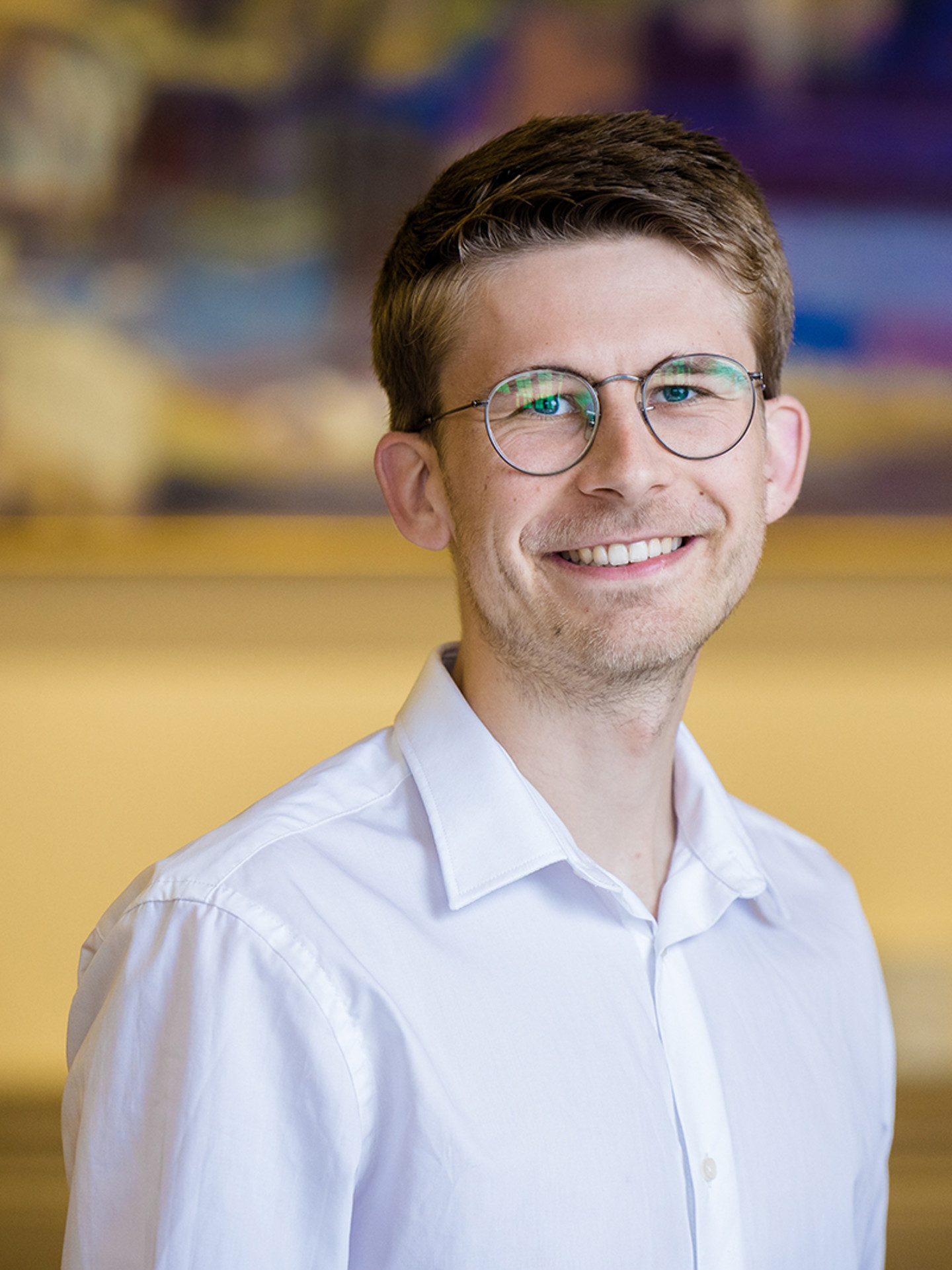
Dr. Kasimir Dederichs

Dr. Kasimir Dederichs is a Postdoctoral Prize Research Fellow in Sociology at Nuffield College, University of Oxford. His research interests include civic engagement, social capital, social cohesion, integration, interethnic relations, and partnership formation. He applies a diverse set of quantitative methods to survey and administrative data to study these topics. Before coming to Oxford for his PhD, Kasimir obtained his B.Sc. (Social Sciences) and M.Sc. (Sociology and Social Research) at the University of Cologne. You can find more information about him here: https://www.nuffield.ox.ac.uk/people/profiles/kasimir-dederichs/

Cologne International Forum Overview