Field Reflections from the Research Dissemination and Stakeholder Engagement Visit to Thailand in December 2023
 
Learning from Neglected Conflicts: Impressions from the Thai-Myanmar Border
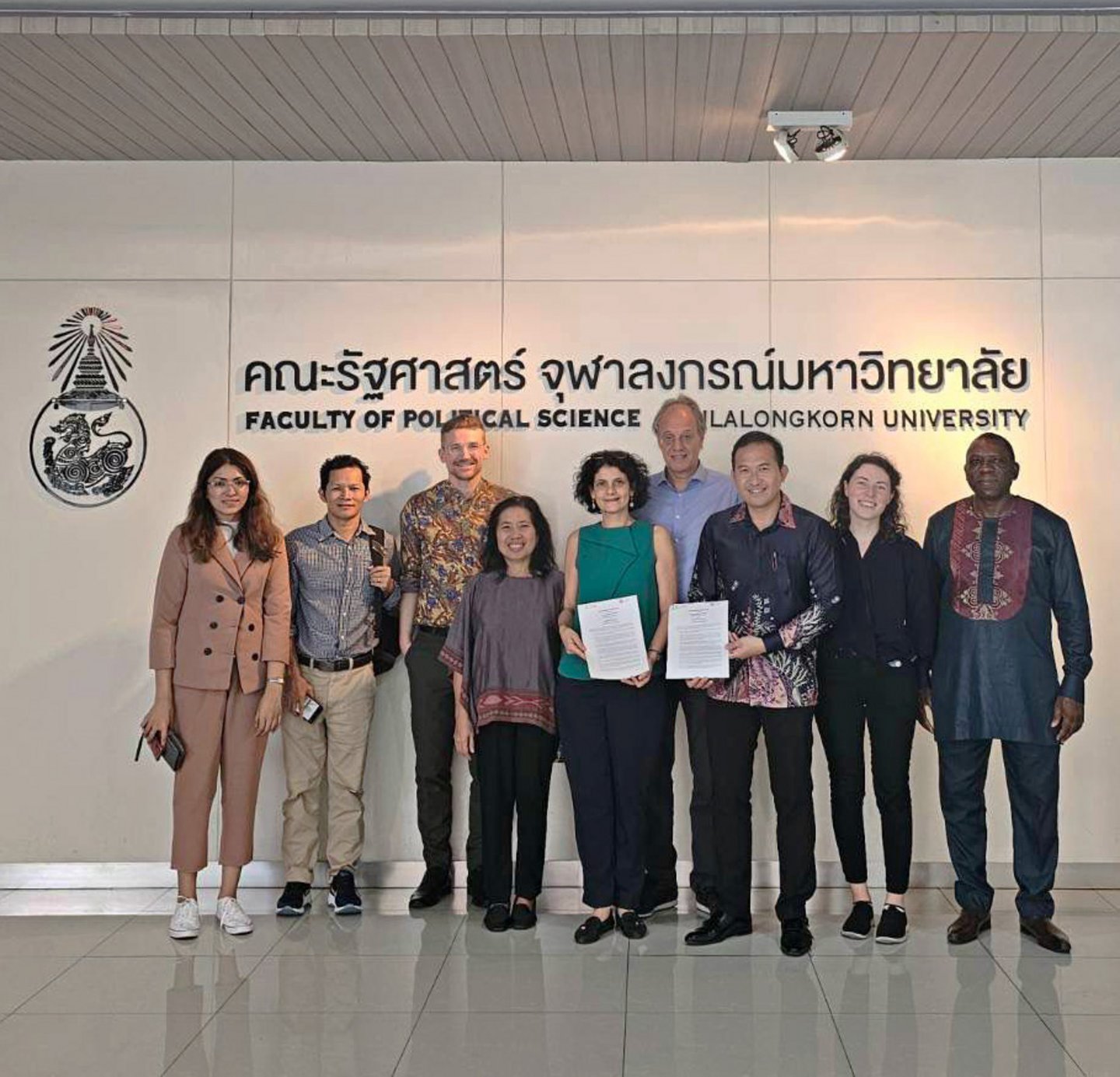
In December 2023, members of the CIF International Research Cluster on “Conflict-Induced Displacement” convened in Thailand to join the International Migrants Day Conference at Chulalongkorn University and go on a field visit to the city of Mae Sot, Tak province.
This experience brought together a diverse group of junior and senior researchers who contribute to various sub-projects within the cluster. Our objective was not only to gain insights into the complexities of conflict-induced displacement in the Thai-Myanmar border region, but also to bridge the perspectives from the two distinct conflict zones in Cameroon and Myanmar studied by the project.
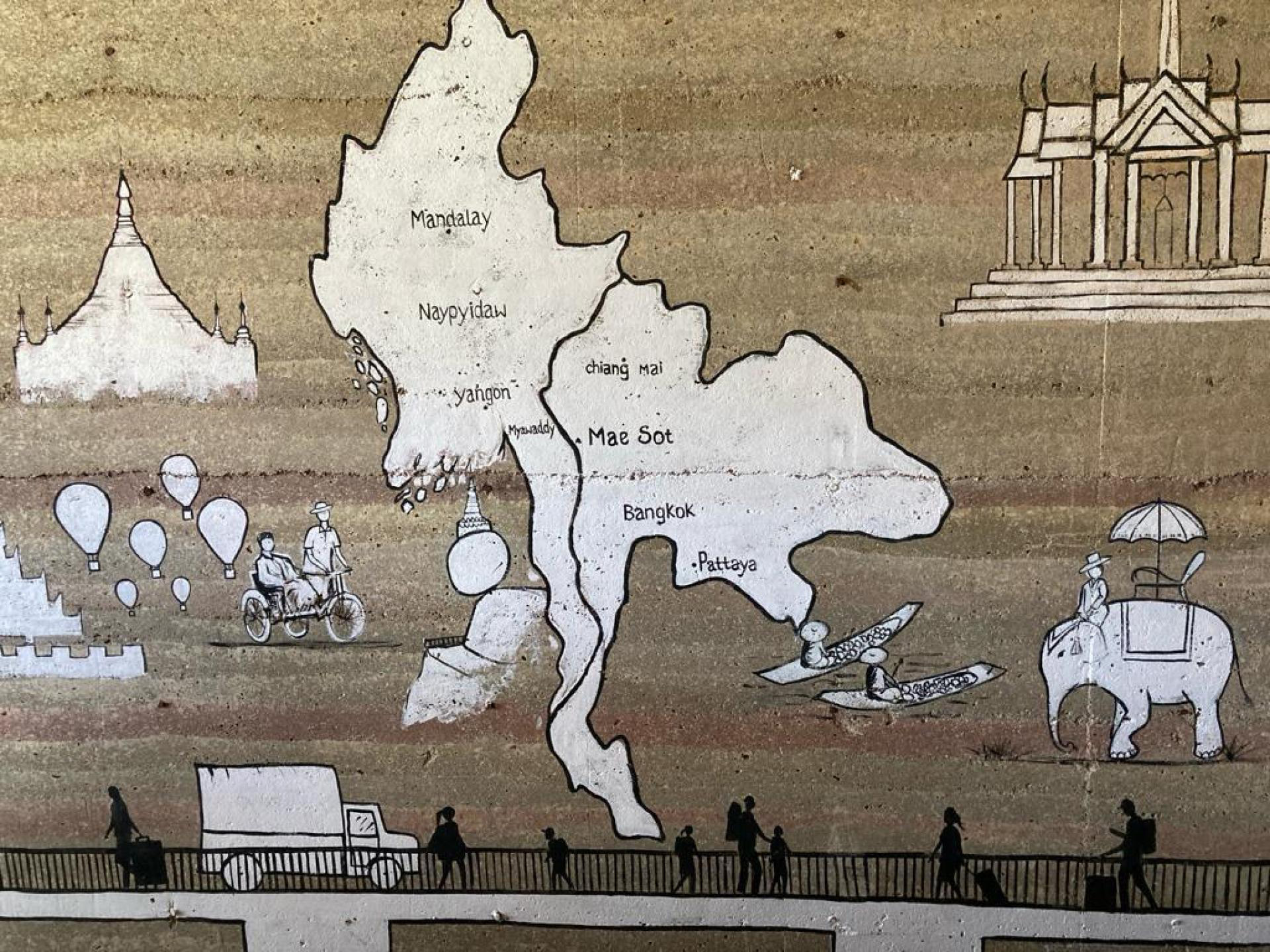
Mae Sot, located in the west of Thailand at the border to Karen state in Myanmar, is the research site of two of the cluster’s subprojects and a place of great relevance for migration processes in the region. Since the 2021 military coup, violence escalated in Myanmar, triggered a humanitarian crisis, and caused significant displacement both internally and across the border.
To navigate through the multifaceted aspects of this context, we visited key locations in Mae Sot and engaged in dialogue with different local actors, including NGOs and community initiatives. The following blog entries will give an insight into some of the impressions that the cluster members gained from this trip. This will lay the foundation for future research and collaboration that bring together learnings from neglected conflicts in distinct locations.
International Migrants Day Conference at Chulalongkorn University: Exploring Pathways for Migrant Inclusion
On December 15th, 2023, members of our research cluster joined the International Migrants Day Conference at Chulalongkorn University in Bangkok. This conference is hosted annually by the Asian Research Center for Migration’s Centre of Excellence on Migration and Development, bringing together various stakeholders including researchers, practitioners, politicians, and international and local non-governmental organizations to discuss current migration-related issues.
Centered around the theme “Exploring Pathways for Migrant Inclusion”, this year’s conference featured the following four panels:
- Climate-Related Migration
- Labour, Legal Pathways and Social Protection
- Education, Skills, and Employability
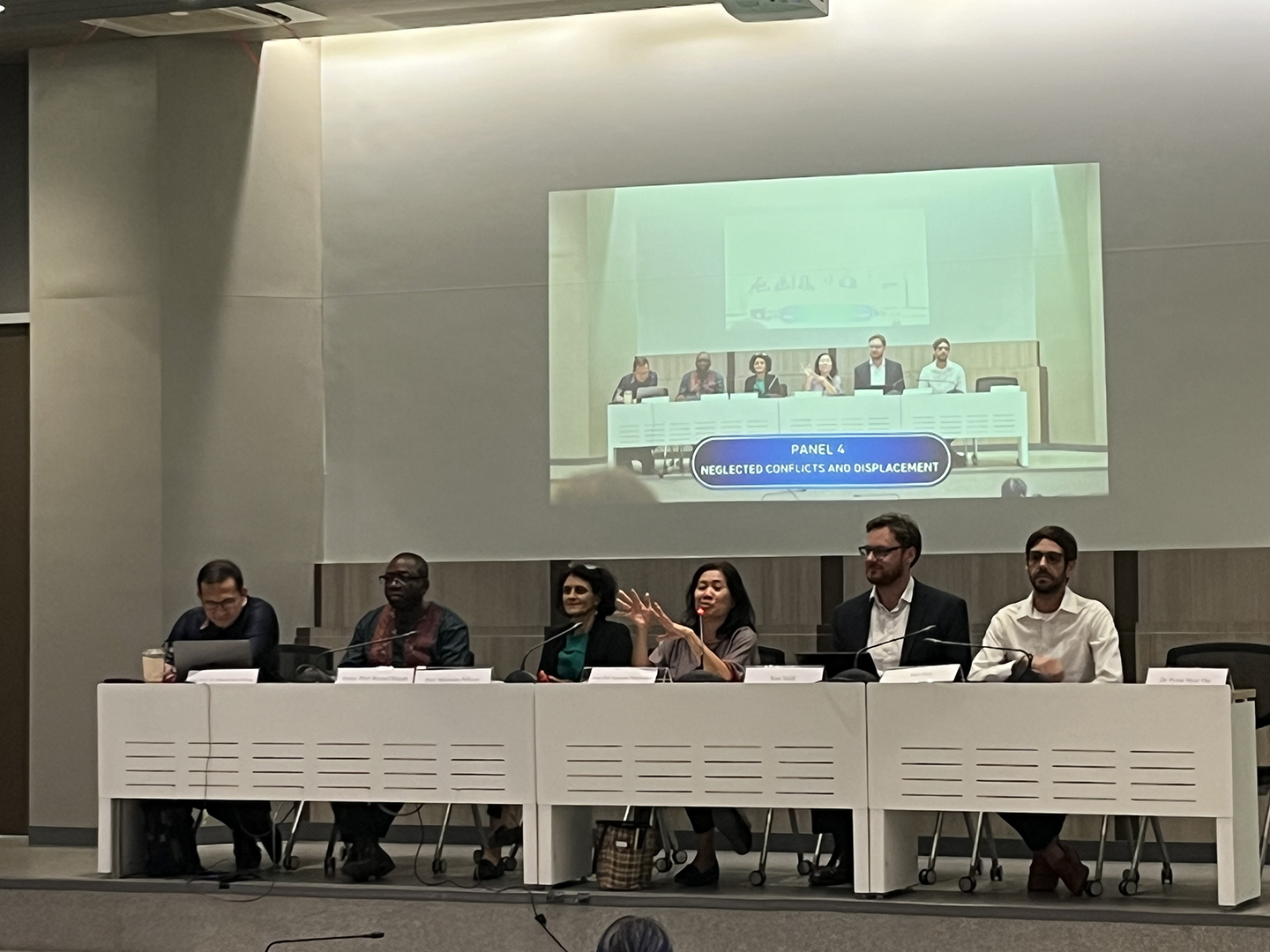
- Neglected Conflicts and Displacement
Our research cluster contributed to the fourth panel on "Neglected Conflicts and Displacement", chaired by Naruemon Thabchumpon. Drawing on the perspectives from the two distinct conflict zones under study in our project, Michaela Pelican and Roland Balgah shared insights into displacement in Cameroon, while Bhanubhatra Kaan Jittiang presented Thailand’s National Screening Mechanism. Additionally, presentations on healthcare for displaced populations in Myanmar and Bangladesh by Tom Triall and on the situation of asylum seekers in Indonesia by Prof. Antje Missbach enriched the discussion.
In my view, the conference seemed particularly fruitful because it reached beyond the purely academic circle. By bringing together voices from various academic, political and civil society perspectives, it gave us the opportunity to listen to and learn from more diverse forms of knowledge and experiences that are necessary for addressing the complexity of questions around migration and inclusion. The conference further provided a valuable platform for networking and collaboration. It allowed participants to engage in question-and-answer sessions and informal discussions with each other, which enabled us to meet old and new colleagues and connect to people with similar fields of interest and expertise. For our research cluster, it was a particularly enriching experience as it marked the first time that some of us had the opportunity to meet in person. Given that our usual mode of collaboration is online, these rare face-to-face meetings were valuable for facilitating thematic discussions, exchanges on personal experiences, as well as productive discussions concerning our publication plans and upcoming field trip activities… which you can read more about below!
Written by Madita Teusen
The full conference recording is available on Facebook and can be accessed here: https://fb.watch/o-mgMiPWWO/
Official abstract: Exploring Pathways for Migrant Inclusion
“As the drivers of migration and mobility become increasingly complicated, this year’s conference highlights new and innovative research, programs and policies in Thailand, ASEAN and beyond that seek to improve the inclusion of migrant populations in societies. Faced with multiple and emerging crises, ranging from environmental changes, economic insecurity, to violence and conflicts, we continue to witness how migrants and their families, characterised by diverse identity markers, face barriers and exclusions throughout their journeys, in work, health, education, social protection, emergency responses and (re)integration. This year’s conference therefore explores new and current international, national and local approaches, policies and practices that seek to include, support and secure migrants’ well-being.”
Kaw Manau – Visiting Curve 33
This picture’s location is the Curve 33 in Ban Mae Konken (Kaw Manau) on the Thai-Myanmar border. The area attracts visitors, including foreigners, and is located in close proximity to the border town of Mae Sot, Thailand. The photo was taken at a point known for its sugar plantation and other crops, where many Myanmar refugees and internally displaced persons (IDPs) work for low wages. They earn around 180 Baht per day and work especially in summer during harvesting time, when the river dries up. The no man’s land across the Thaung Yin River (also known as Moei River) is where many displaced Myanmar people live due to the 2021 coup in Myanmar.
The landscape is stunning, but this place also emphasizes the challenges and suffering faced by the displaced persons and refugees due to the armed conflict and political crises in Myanmar. NGOs face severe humanitarian aid limitations in accessing the area legally.
Written by Francis Nhkaitu Zau Tu
Border Population and Right to Education
Imagine a child arriving in a foreign country, yearning for an education and friends to play with, but facing language barriers and limited access to schools. This is the reality for many children at the Thai-Myanmar border, where prolonged civil war and renewed conflict have disrupted their chance at a brighter future. From the first introductory field trip in March 2023 and the fieldwork of students in 2023 to the second cluster field trip in December 2023, it was truly mesmerizing to meet and connect with the different actors in the field relentlessly working hard to provide inclusive and quality education for the children in border areas.
From the urban setting of Mae Sot to the temporary shelters in Tak province, grassroots initiatives work tirelessly to bridge the gap in educational opportunities for borderland communities. However, amidst these challenges, a ray of hope shines through – efforts by actors like Help Without Frontiers and the Karen Refugee Committee Education Entity are working tirelessly to bridge the educational gap and safeguard these future leaders.
At the forefront of this effort are migrant learning centers like New Day in Mae Sot, which not only provide a culture-friendly learning environment but also pave the way for migrant children to enroll in Thai public schools through language training and non-formal education examination preparations, offering them a chance at a brighter future. Supported by organizations like Help Without Frontiers, these community-driven initiatives underscore the importance of collective action in ensuring educational access and long-term sustainability along the border.
Meanwhile, the Karen Refugee Committee Education Entity stands as a testament to resilience in the face of decades-long conflict. Operating within temporary shelters, this committee works tirelessly to offer equitable and sustainable quality education through innovative mechanisms. By strengthening system and governance for expansion of access to post-secondary education given the post-2021 crisis situations, institutions like Karen Education and Culture Department are not only providing temporary interventions along the border but also strategically embedding education as part of nation-building efforts for future peaceful Myanmar.
As we reflect on our experiences from the Thai-Myanmar border, the initiatives align closely with the United Nations Sustainable Development Goal #4, which aims to ensure inclusive and equitable quality education for all. In this renewed conflict context, it becomes clearer that education is not just a fundamental right but also a catalyst for peace and prosperity in conflict-affected regions. By investing in the education of borderland populations, we are not only investing in the future of individuals but also laying the foundation for a more just, equitable, and peaceful society for generations to come.
Written by Su Myat Thwe
Community Meeting: Discussing Research Results
Now it is time to welcome special guests! We sit down together in a comfortable circle and Simon opens the projector to start presenting results of his research. As a part of the cluster’s Subproject 2, he analyzed the extent of labor market integration among people that have been displaced to Thailand after the 2021 coup in Myanmar. Without documentation and a legal resident status, they face significant barriers in finding jobs and participating in the labor market. Simon describes this as a missed opportunity for Thailand’s social and economic development. Why?
The graphs on the projector reveal that the displaced people bring various educational backgrounds, skills and work experiences with them. His analysis shows that these could potentially match the diverse needs of the Thai labor market, which is impacted by labour force declines and an aging population. The post-coup displaced persons could therefore play an important role in Thailand’s social and economic development, but up to now this remains an “unmet potential”, as Simon explains.
His data is based on a quantitative questionnaire that 255 conflict-induced displaced people in Mae Sot responded to in May and June 2023. It included questions on people’s livelihood situation, their labour market integration, financial situation, and educational level, to name a few aspects. Finding survey participants and conducting these interviews in Mae Sot came with numerous challenges, given the displaced people’s living situation in Mae Sot facing frequent police raids and arrests. The solution was the help of a team of three research collaborators who helped to gather the answers. Being from Myanmar themselves, they could conduct the interviews in Burmese language and recruited the respondents via personal networks and snowball sampling. Simon closely collaborated with them, analyzed the responses and, under the guidance of his advisors in both Germany and Thailand, completed his master’s thesis on this topic.
Now, 6 months later, he returned to share his results with exactly the people that had made the data collection possible in the first place. The guests who joined us were members of the local Mae Sot community: Simon’s research team and NGO staff active in education work in the area. They communicated a big interest in the results, shared their own experiences during the data collection process and provided valuable feedback. They also gave us new ideas for the research, such as one participant who encouraged Simon to explore a gendered dimension of his results.
This meeting was an invaluable step of our trip. We do not only appreciate the new input, but know that it is a privilege to return and share the results of the joint work. Up to now, this step is often missed or overlooked in research practice, but it is a crucial one in order to achieve more eye-level cooperation and improve the quality of research by sharing, validating and discussing the results with the people who made it possible, informed it and remain the experts on their own situation.
On a side note: A parallel feedback workshop with the same intention - sharing the research results back to the study participants - was also conducted in the context of our cluster’s Subproject 1 in Bafoussam, Cameroon in November 2023. A short film documenting this event will soon be published here on our website.
Written by Madita Teusen
The Assistance Association of Political Prisoners (AAPP)
Our final meeting of the trip was with AAPP, an organization which supports political prisoners and their families by providing food, along with financial and psychological support. Our first initial field trip to Mae Sot in March 2023 already allowed us to gain a better understanding of the history of conflicts in Myanmar and AAPP's crucial work. Both individuals who welcomed us at the AAPP office have faced several years in prison as political prisoners. They highlighted the growing challenges in supporting political prisoners in Myanmar since the coup d’état. The junta's restrictions on visits and the provision resources have made it increasingly difficult to provide support effectively.
AAPP on-the-ground support consists primarily of visiting prisoners and their families, providing food and cash, and offering psychological counseling. With increasing cases of trauma, depression, anxiety, and substance abuse, the 19-member mental health support team has become an irreplaceable asset. But declining funding has made it difficult for AAPP to expand their services as widely as they would like.
AAPP also focuses on documenting war crimes and civilian violations, especially for the cause of transitional justice in the post-coup period. During the period of democratization from 2013 to 2020, they conducted training on human rights, human rights violations, and transitional justice for civil society members. This network now plays a key role in documenting the atrocities of the junta. They explained that the current conflict situation, almost 3 years after the coup, is worse than ever. Escalating violence, including bombings, shootings and abuses against civilians, has led to atrocities on an unseen scale. According to their information, more than 4,000 civilians, including many children and women, have lost their lives since the coup. The number of political prisoners is estimated to be at least 19,000.
Written by Simon Becker